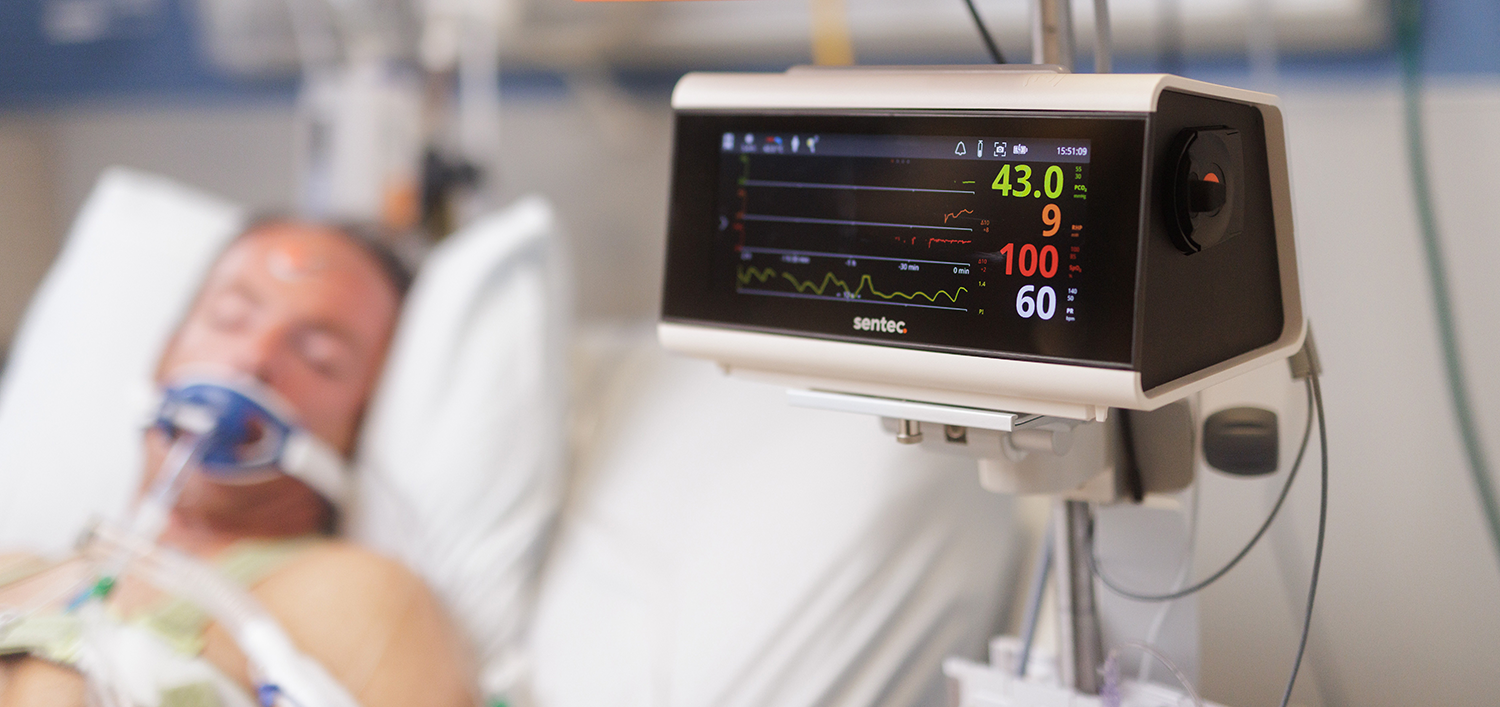
Transcutaneous CO2 Monitoring For The Sleep Lab

How could transcutaneous CO2 monitoring support your sleep lab team? Get an overview of this technology’s role in patient care and explore the Sentec monitoring system designed for sleep.

More Resources for Your Sleep Lab

Case Studies from Nemours Children’s Hospital

Lisa DeGuzman, RRT-NPS, RPSGT, CCSH discusses the role of transcutaneous CO2 monitoring in the sleep lab, highlighting its applications in detecting and guiding the management of sleep-disordered breathing in the pediatric population.

Read the cases.

10 Reasons to Choose Sentec for Your Sleep Lab

With product features designed for the sleep lab, the Sentec Transcutaneous Monitoring System combines ease of use and patient comfort with accurate values regardless of ventilation method or ventilation perfusion (V/Q) mismatch.

Is it right for your sleep lab team?

Stay up-to-date with Sentec


Related Posts

  • Whitepaper

    Q&A with the NICU team who built a pain-reducing QI

    This interview with the NICU team at Woman's Hospital answers how they built a plan to lower blood gas draws, with transcutaneous monitoring, standardized protocols, and create staff-led care improvements.

  • Product Spotlight

    Accurate transcutaneous CO2 monitoring for agile respiratory care teams

    Explore how transcutaneous CO₂ monitoring delivers noninvasive, real-time insights to support better outcomes for both clinicians and patients.

  • Sentec Article

    The Power of QIs: 5 Quality Improvement Projects Making a Difference for Patients

    Quality improvement projects are driving change in healthcare. This issue spotlights five impactful initiatives improving safety, efficiency, and care delivery.