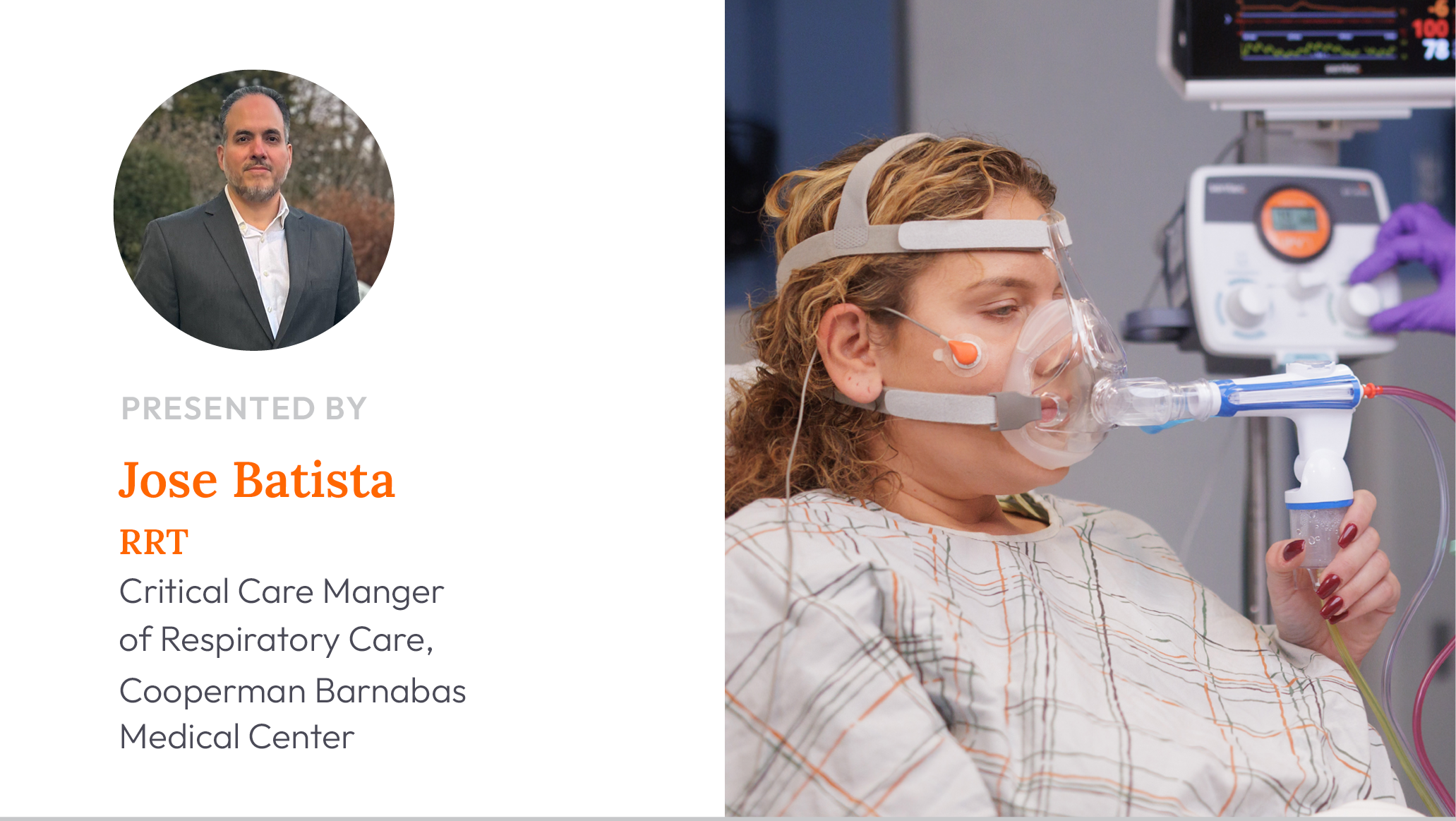


For mechanically ventilated patients with secretion retention, atelectasis, or hyperinflation, airway clearance remains a critical component of respiratory care. However, disconnecting high-acuity patients from the ventilator to deliver therapy can introduce risks, including lung derecruitment and patient instability.
This is where delivering Intrapulmonary Percussive Ventilation (IPV®) therapy in-line with a mechanical ventilator can provide a significant advantage.
By allowing clinicians to perform airway clearance therapy without breaking the ventilator circuit, inline IPV therapy helps maintain lung recruitment while providing the benefits of secretion mobilization, improved gas exchange, and lung expansion.
Why Patients Need IPV Therapy
Many patients requiring airway clearance therapy experience one or more of the following conditions:
- Secretion retention
- Atelectasis
- Hyperinflation or air trapping
While these conditions can occur independently, they are often interconnected, particularly in critically ill patients.
Examples of patient populations that may benefit from IPV therapy include:
- Pneumonia patients
- Bronchiolitis patients
- COPD patients
- Asthma patients
- Neuromuscular disease
- patients
- Cystic fibrosis patients
- Post-surgical patients
The goal of IPV therapy is to help optimize lung function, improve gas exchange, mobilize retained secretions, reduce work of breathing, and potentially decrease ventilatory support requirements.
Unlike many airway clearance approaches that require multiple therapies to address different problems, IPV therapy can simultaneously target secretion retention, atelectasis, and hyperinflation within a single treatment session.
CHAPTERS
How IPV Therapy Works
IPV therapy utilizes high-frequency, high-velocity bursts of gas delivered through the Phasitron® to create subtidal volume pulses within the airways.
These percussive bursts travel beyond airway obstructions and areas of secretion accumulation, helping to:
- Mobilize retained secretions
- Improve lung recruitment
- Enhance gas exchange
- Promote airway hydration
- Support mucus clearance
The unique flow characteristics of IPV therapy allow airflow to reach diseased or poorly compliant regions of the lung that may receive minimal ventilation during conventional mechanical ventilation alone.
This ability to recruit under-ventilated lung regions is one of the key reasons IPV therapy remains a valuable tool in both pediatric and adult respiratory care.
Why Deliver IPV Therapy In-Line?
For some patients, disconnecting the ventilator circuit may be clinically acceptable. For others, maintaining ventilator support throughout treatment is essential.
Inline IPV therapy is particularly valuable for patients:
- With high ventilatory support and oxygen requirements
- At high risk of de-recruitment
- With acute decompensation when disconnected from the ventilator or during suctioning
- Hemodynamic instability/limited physiologic reserve
By delivering IPV therapy through the inline valve, clinicians can provide airway clearance while continuing to support the patient with mechanical ventilation.
This approach helps reduce the risk of lung de-recruitment that can occur when high-risk patients are disconnected from the ventilator circuit.
Understanding the Inline Valve
The inline valve is designed specifically to facilitate IPV therapy during mechanical ventilation.
A built-in one-way valve allows IPV pulses to reach the patient while preventing ventilator flow from escaping through the Phasitron during treatment.
This design helps preserve ventilator-delivered support while adding the therapeutic benefits of IPV.
The inline valve also includes a pressure relief port that can be adjusted if airway pressures become higher than desired during therapy.
When used appropriately, the inline valve allows clinicians to balance airway clearance therapy with the patient’s ventilatory needs.
Ventilator Considerations During Inline IPV Therapy
Although IPV therapy can be delivered in multiple ventilator modes, pressure control ventilation is generally preferred.
Pressure control modes tend to adapt more effectively to the additional flow introduced during IPV therapy and may reduce the likelihood of high-pressure alarms.
Clinicians should closely monitor:
- Peak airway pressures
- Mean airway pressure
- Trigger sensitivity
- Oxygenation and vital signs
If airway pressures become elevated, the pressure relief port can be gradually adjusted to help reduce excessive pressure while maintaining effective chest wiggle and therapy delivery.
As with any advanced respiratory therapy, continuous patient monitoring remains essential throughout treatment.
What Defines Effective IPV Therapy?
The most important clinical indicator of effective IPV therapy remains adequate chest wiggle.
Clinicians should:
- Look for visible chest wiggle
- Feel for chest movement
- Auscultate lung fields for aeration of pulses
In some patient populations, such as those with reduced chest wall compliance, abdominal movement may be more apparent than chest movement.
Frequency adjustments can also influence therapy goals. Faster frequencies are often effective for secretion mobilization and gas exchange, while slower frequencies may help break up thick mucus plugs and support lung recruitment.
Alternating between fast and slow frequencies during treatment can help maximize therapeutic benefit.
Best Practices for Inline IPV Delivery
Successful inline IPV therapy begins with a structured workflow.
Key recommendations include:
- Follow institutional protocols
- Place the inline valve on the inspiratory limb of the ventilator circuit
- Remove HMEs unless using a bypass HME designed for aerosol therapy
- Keep the Phasitron expiratory port unobstructed
- Ensure adequate nebulization throughout treatment
- Monitor patient response continuously
- Restore all ventilator settings and alarms after therapy is completed
A consistent approach helps improve treatment effectiveness while minimizing unintended ventilator interactions.
Expanding Airway Clearance Options for Ventilated Patients
For mechanically ventilated patients who require aggressive airway clearance, inline IPV therapy provides an effective way to deliver treatment while maintaining ventilatory support.
By combining the benefits of IPV therapy with the stability of mechanical ventilation, clinicians can address secretion retention, atelectasis, and hyperinflation without routinely disconnecting vulnerable patients from the ventilator circuit.
As respiratory care teams continue to seek strategies that improve outcomes while reducing risk, inline IPV therapy remains an important option for managing complex pulmonary conditions in both pediatric and adult populations.
Watch the Full Webinar
This article highlights key concepts from our recent educational webinar on delivering IPV therapy in-line with mechanical ventilation.
In the full recording, the Sentec Clinical Education Team reviews clinical indications, contraindications, ventilator considerations, inline valve functionality, treatment workflows, troubleshooting strategies, and answers common questions from respiratory therapists and critical care clinicians.
Watch the full webinar recording to see inline IPV therapy setup demonstrations and learn additional best practices for airway clearance in mechanically ventilated patients.