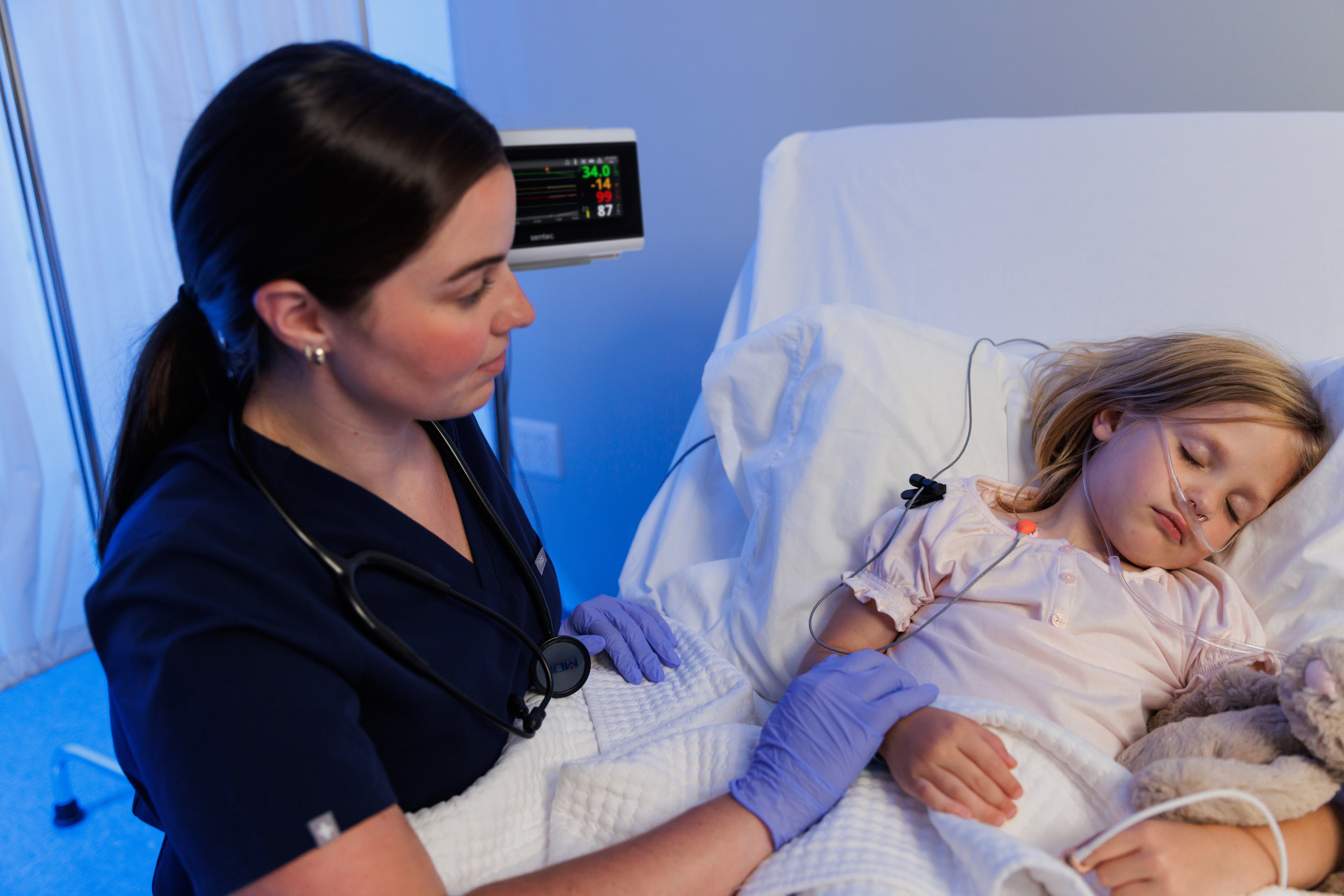


One of the most common questions I receive from clinicians is how to get the most consistent performance from their Sentec transcutaneous monitoring system. One of the most useful tips I give most frequently is by ensuring a cadence of proactive maintenance.
Whether you’re monitoring patients in the NICU, sleep lab, or another clinical environment, routine maintenance plays a critical role in sensor performance, accuracy, and reliability. Over the years, I’ve found that the issues users sometimes encounter, from extended calibration times to docking station leaks and sensor errors, can often be prevented through a few simple maintenance practices.
Building a Strong Foundation for Transcutaneous CO2 Monitoring
I like to think of proactive maintenance as the foundation of successful transcutaneous CO2 monitoring. When sensors are properly maintained, clinicians spend less time troubleshooting and more time focusing on patient care.
The good news is that maintaining your Sentec monitor doesn’t require a significant investment of time. By incorporating a few simple checks into your daily, weekly, monthly, and quarterly workflows, you can help ensure your system is always ready when you need it.
Daily Maintenance Starts with the Sensor
The most important maintenance task is also the simplest.
Before and after each patient use, I recommend visually inspecting the sensor and cleaning it with a 70% alcohol wipe. This helps remove residual gel and contaminants that can accumulate during monitoring.
A quick visual inspection can also identify potential issues before they become larger problems. For example, signs of dried electrolyte, air bubbles beneath the membrane, or membrane damage can all affect sensor performance and should be addressed before patient use.
And then, returning the sensor to the docking station after cleaning allows it to calibrate properly and remain ready for the next patient.
Weekly Checks Help Prevent Common Issues
Each week, I recommend taking a closer look at the monitor itself.
This includes cleaning and disinfecting the monitor, inspecting the docking station, and removing any dried gel or debris that may have accumulated around the gasket or O-ring. These areas are easy to overlook, but contamination can contribute to docking station leaks and calibration issues over time.
It’s also a good opportunity to clean and inspect the sensor adapter cable and verify that all components remain in good condition.
Why Monthly Maintenance Matters
If there’s another maintenance task I encourage every user to prioritize, it’s the monthly membrane change.
The electrolyte beneath the membrane naturally dries out over time, even when the monitor is not actively being used. As that electrolyte degrades, sensor performance can be impacted, resulting in longer calibration times and less reliable operation.
For that reason, Sentec recommends replacing the membrane every 28 days and following the replacement with a sensitivity test.
I also recommend using this monthly maintenance interval to inspect the monitor, verify cable integrity, check available supplies, and perform a power-on self-test if the monitor has not been used recently.
These small steps can go a long way toward preventing unexpected issues when the monitor is needed for patient care.
Don’t Forget: Quarterly Maintenance
Four times per year, I recommend adding a clean-and-soak procedure before performing the routine membrane replacement.
This process helps remove residue that can build up on the sensor over time and supports long-term performance. While it only takes a few additional minutes, it can contribute significantly to sensor longevity and reliability. Perform a clean and soak for Sentec transcutaneous sensor
After the clean-and-soak procedure, complete a membrane change and sensitivity test to ensure the sensor is ready for clinical use.
Consistency Delivers Better Results
What I’ve seen repeatedly in the field is that facilities with strong maintenance habits tend to experience fewer sensor issues, fewer calibration problems, and better overall user experience.
Proactive maintenance isn’t complicated, but it is important. A few minutes spent maintaining your monitor today can help prevent interruptions and troubleshooting tomorrow.
If you’re looking to improve the performance and reliability of your Sentec transcutaneous monitoring system, establishing a consistent maintenance routine is one of the most effective places to start.
CHAPTERS
Watch the Full Webinar
In this article, I’ve highlighted the key principles of proactive maintenance, but our full webinar goes into much greater detail. I demonstrate membrane changes, sensitivity testing, quarterly clean-and-soak procedures, and answer common questions from clinicians using Sentec monitoring systems every day.
Watch the full webinar recording to see these procedures in action and learn additional best practices for maintaining your Sentec transcutaneous monitoring equipment.