Reference posters and tools to support your NICU team

Hang these posters up in your unit for quick, simple references that make transcutaneous monitoring simple. This bundle offers six print-ready, at-a-glance resources for your team.

Resources include:

  • Recommended CO2 targets for neonates
  • Recommended interventions for abnormal CO2 levels
  • Advantages and disadvantages of different CO2 monitoring methods
  • Troubleshooting guide
  • Breakdown of clinical use cases
  • Overview of considerations for specific conditions like edema, premature skin, and more.

Reference posters and tools to support your NICU team

Hang these posters up in your unit for quick, simple references that make transcutaneous monitoring simple. This bundle offers six print-ready, at-a-glance resources for your team.

Resources include:

  • Recommended CO2 targets for neonates
  • Recommended interventions for abnormal CO2 levels
  • Advantages and disadvantages of different CO2 monitoring methods
  • Troubleshooting guide
  • Breakdown of clinical use cases
  • Overview of considerations for specific conditions like edema, premature skin, and more.

More resources for your NICU team

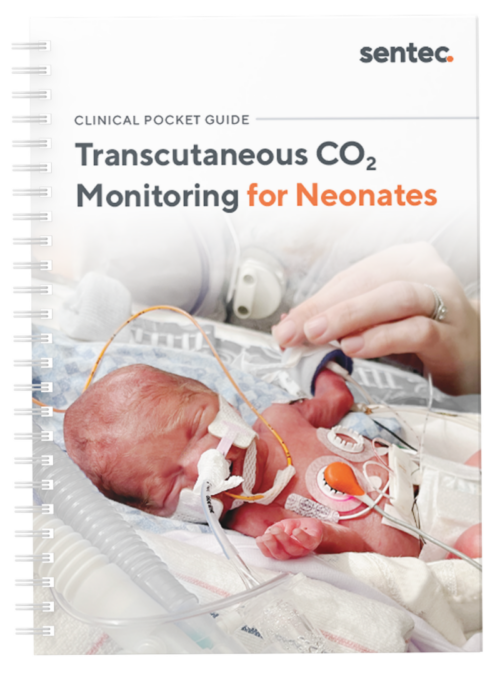
NICU Clinical Pocket Guide

Transcutaneous CO2 monitoring can be a valuable tool for your small baby unit care. Our Clinical Pocket Guide on Transcutaneous CO2 Monitoring for Neonates can assist your team in integrating this technology into your unit’s protocols or enhancing its use to support patient care.

Order copies for your team.

Free CE Session: Supporting Key Initiatives for VLBW Infants

Learn with Chelsea Lee, BSN, RNC-NIC, as she explores how continuous CO2 monitoring can support bundled care and key initiatives for very low birth weight infants.
Get started today.

Stay up-to-date with Sentec


Related Posts

  • Sentec Article

    Methods of Monitoring Carbon Dioxide (CO2) in the NICU

    Learn how CO2 is monitored in the NICU. Compare arterial blood gas, end-tidal CO2, and transcutaneous monitoring to support precise neonatal ventilation management.

  • Sentec Article

    Carbon Dioxide (CO2) Monitoring in the Sleep Lab

    Explore the importance of CO₂ monitoring in the sleep lab, including methods like transcutaneous and end-tidal monitoring, to better detect ventilation issues and improve outcomes in patients with sleep-disordered breathing.

  • Sentec Article

    CO2 Levels in Neonates

    Learn why CO₂ levels matter in neonates, the risks of hypo- and hypercapnia, and how CO₂ monitoring guides safe, effective respiratory support in the NICU.