
In the intensive care unit (ICU), retained secretions pose a significant clinical risk. They contribute to mucus plugging, atelectasis, and impaired gas exchange, and can drive a cycle of infection, inflammation, and declining lung function — all of which can make ventilator weaning more difficult.¹
In the ICU, respiratory therapists routinely manage airway secretions, with suctioning serving as a mainstay of care. Yet suctioning alone may not fully address the burden of secretions in critically ill or ventilated patients. Additional airway clearance methods are available, but their effectiveness in this population is not well established.
Given the clinical impact of secretions and the potential shortcomings of current practices, it’s important for respiratory therapists to look beyond the current standards and consider more targeted, evidence-based therapies that could support better overall outcomes for patients.
Why Secretion Clearance Matters in the ICU
Airway clearance depends on two main mechanisms: mucociliary clearance and cough. Mucociliary clearance moves mucus along the airway surfaces, while cough works to expel secretions from the central airways, especially when they are thick or abundant. In critically ill patients, one or both mechanisms can be impaired. Illness itself, through inflammation and altered mucus production, can thicken secretions and slow ciliary function, while iatrogenic factors such as mechanical ventilation and sedation can weaken or prevent an effective cough. As a result, secretions become a persistent challenge in the ICU.
While a routine part of ICU care, secretions are far from benign. When mucus accumulates, it can set off a harmful cycle: trapped secretions promote infection and inflammation, which further damages the lungs and impairs clearance. Without effective intervention, this cycle continues, making it increasingly difficult for patients to break free and recover. And the effect on patient outcomes has proven detrimental.
For one, secretion burden can greatly complicate ventilator weaning. A 2022 study identified difficulty clearing secretions as the leading cause of reintubation, with frequent tracheal suctioning serving as an independent predictor.1
Further, secretions have been linked to poorer patient outcomes, including mortality. Diaz et al. (2023) found that in COPD patients, mucus plugs in medium-to-large airways were linked to higher mortality: over nearly 10 years, mortality was 34% in patients without plugs, 47% with plugs in 1–2 segments, and 54% with plugs in 3 or more segments.2
Studies like these show that secretion management is far more than routine maintenance — it’s a critical component of care, where proactive targeting can directly influence survival and recovery.
Airway Clearance Techniques for the ICU
Endotracheal Suctioning
Endotracheal suctioning is a routine procedure for patients with an artificial airway, where a suction catheter is inserted into an endotracheal or tracheostomy tube to draw out accumulated secretions.
Advantages:
- Can be performed quickly to keep airway patent
- May stimulate a cough
- Familiar to ICU staff
Limitations:
- Carries procedural risk if not performed correctly, including infection and damage to the airway mucosa3
- Can trigger a vagal response
- Effectiveness is limited to clearing the trachea and artificial airway when a patient cough is absent
Chest Physical Therapy (CPT)
CPT involves manual techniques such as percussion (clapping) and vibration applied to the patient’s chest and back by a respiratory therapist to help loosen and mobilize mucus.
Advantages:
- Low cost
- Can be performed without any equipment
- Familiar to ICU staff
Limitations:
- Limited evidence available in ICU populations
- Some evidence shows minimal impact on patient-centric outcomes, like survival or ventilator duration4
- Difficult to standardize
- Time- and labor-intensive for RTs
Intrapulmonary Percussive Ventilation (IPV) Therapy
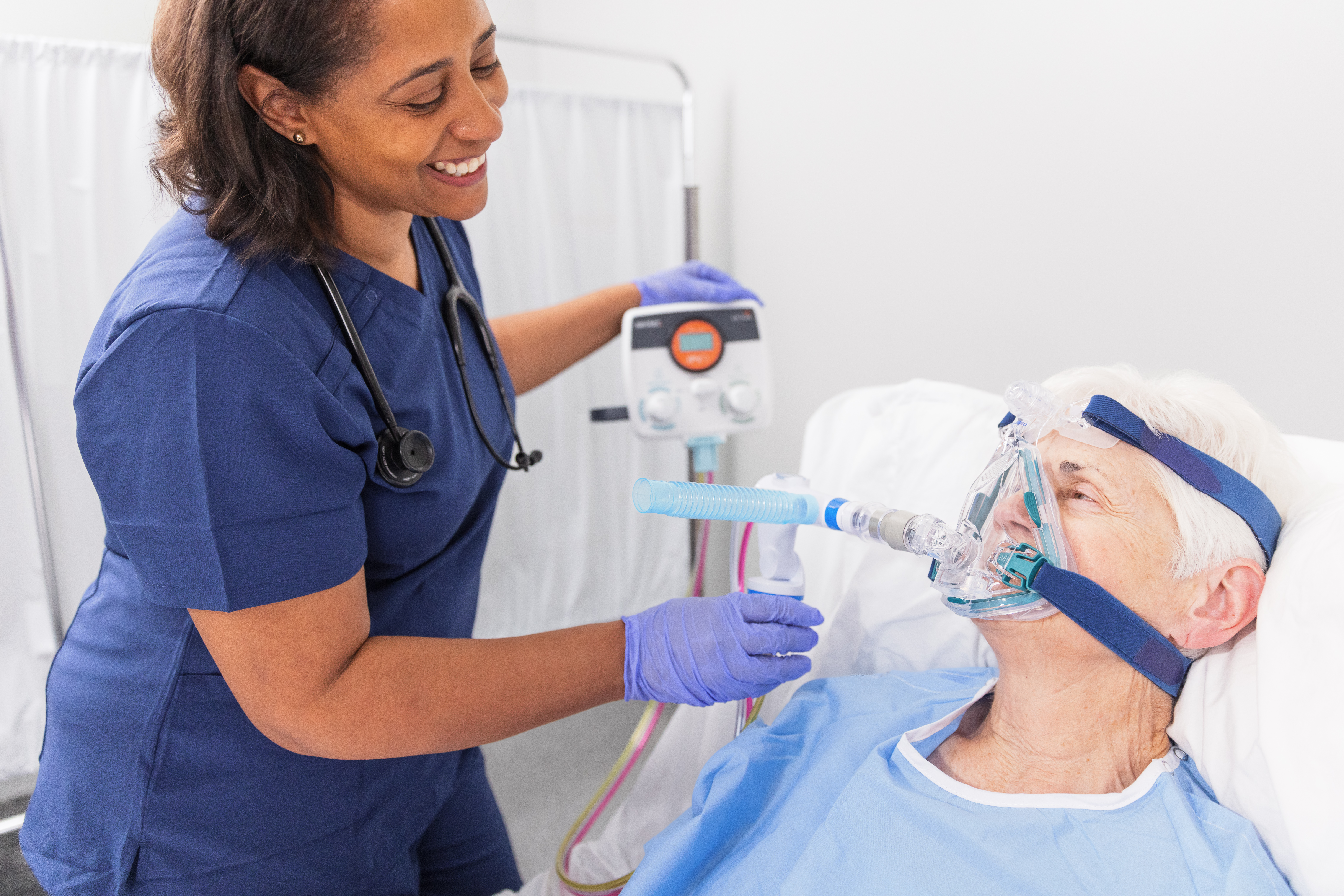
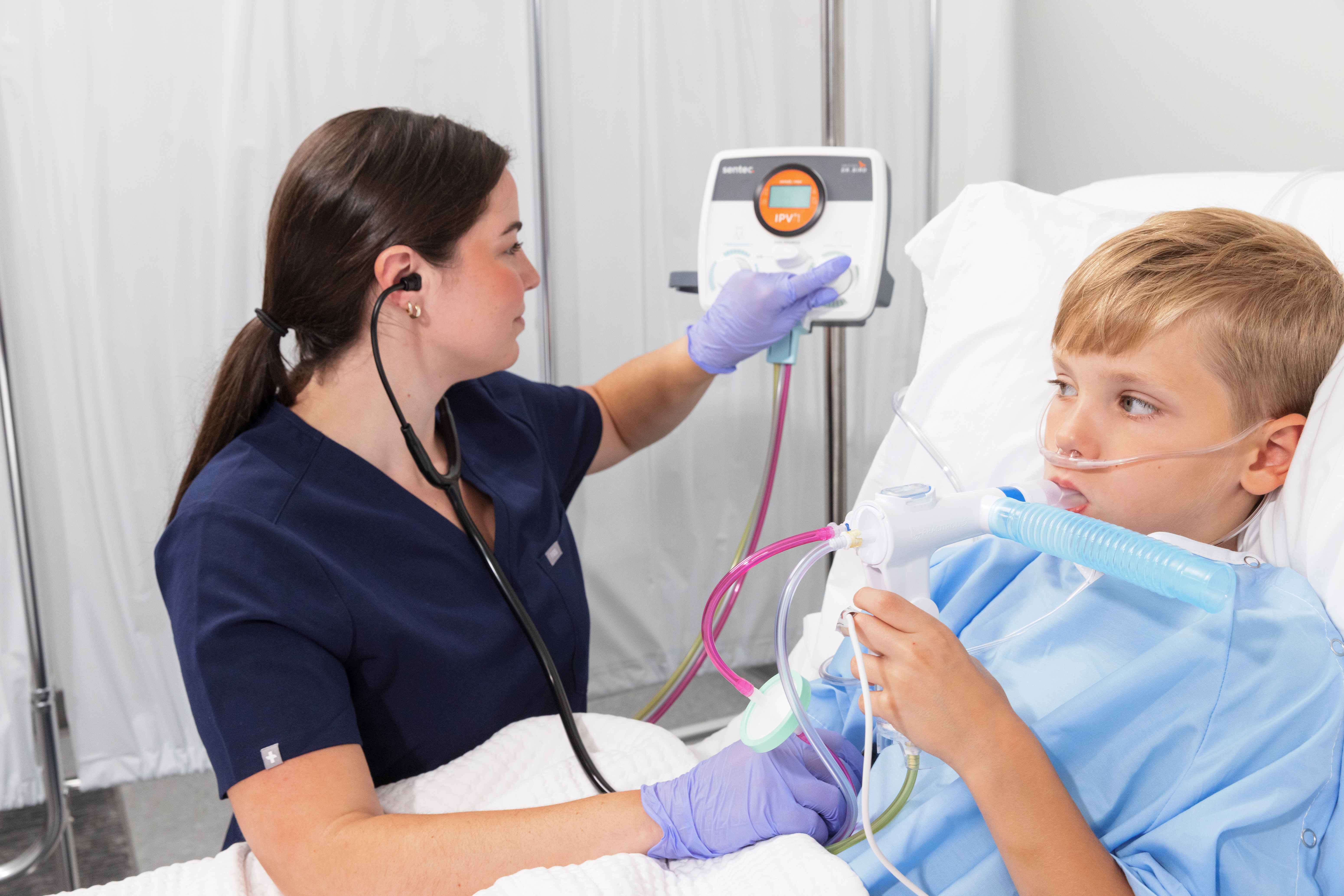
IPV therapy delivers high-velocity, high-frequency, sub-tidal volume pulses and allows for passive exhalation. Features within the patient circuit constantly adapt flow in response to the patient, working with the patient to provide a treatment that accesses distal airways, supports lung recruitment, and mobilizes secretions.
Advantages:
- Can loosen and mobilizes secretions, treat atelectasis, and help relieve air-trapping in one therapy
- Has been shown to outperform chest physical therapy (CPT), high-frequency chest wall oscillation (HFCWO), and oscillation and lung expansion therapy (OLE) in mobilizing secretions5,6
- Versatile delivery via mask, mouthpiece, direct to the airway, or in-line with a ventilator, making it suitable for a range of ICU patients
Limitations:
- Lack of patient participation via mouthpiece or mask can reduce efficacy

High-Frequency Chest Wall Oscillation (HFCWO / “vest” therapy)
HFCWO, commonly known as “vest” therapy, uses an inflatable vest that rapidly inflates and deflates to generate chest vibrations. These vibrations are meant to loosen mucus and move it toward the larger airways. For optimal effectiveness, patients often perform strong coughs or huff coughs during and after treatment.
Advantages:
- Well-established and familiar in certain patient groups, including cystic fibrosis
- Requires minimal participation from clinicians, making it a convenient option for workflow
- Can help loosen secretions from airway walls and aid in secretion mobilization during cough
Limitations:
- Limited evidence available in ICU populations
- Some patients report discomfort during therapy7
- Effectiveness is limited without adequate patient cough
- Often needs to be combined with additional methods, like cough assist
Positive Expiratory Pressure (PEP) Therapy
PEP therapy uses a mask or handheld mouthpiece that allows free airflow during inhalation but creates resistance during exhalation. This resistance helps drive air behind mucus, loosening it from the airway walls, while also keeping small airways open to prevent collapse and facilitate secretion clearance. Oscillatory PEP (OPEP) devices are also available, which add gentle vibrations during exhalation to support mucus mobilization.
Advantages:
- Simple, portable, and patient-driven
Limitations:
- Use is limited to patients who can actively participate, making it unsuitable for ventilated or sedated patients, as well as those in respiratory distress or unable to follow instructions
- Evidence is limited in ICU populations
- Patient fatigue can reduce effectiveness
Oscillation & Lung Expansion (OLE) Therapy
OLE therapy uses a combination of positive expiratory pressure and high-frequency oscillations to promote airway opening and facilitate mucus clearance.
Advantages:
- Can loosen and mobilizes secretions and helps treat atelectasis
- Versatile delivery via mask, mouthpiece, or in-line with a ventilator, making it suitable for a range of ICU patients
Limitations:
- Lack of patient participation via mouthpiece or mask can reduce efficacy
- Available blower-based systems lack clinical evidence supporting efficacy
Manual Insufflation-exsufflation (MI-E/Cough Assist)
Manual insufflation-exsufflation (MIE), often called “cough assist,” is a technique that can support patients who have a weak or ineffective cough. A rapid positive pressure breath (insufflation) is delivered, followed immediately by negative pressure (exsufflation), to mimic a natural cough.
Advantages:
- Can help mobilize secretions from the upper/proximal airways
- Versatile delivery via mask, mouthpiece, or in-line with a ventilator, making it suitable for a range of ICU patients
Limitations:
- Limited effect on distal airways
- Reduced efficacy without the presence of an artificial airway or active patient participation
Choosing the Right Secretion Management Strategy for Your Patients
When choosing an airway clearance strategy in the ICU, it’s essential to consider each patient’s individual condition and needs. Factors such as underlying illness, ventilatory status, and the ability to cough or cooperate can all influence which approach will be most effective. A therapy that works well for one patient may be less effective, or even potentially harmful, for another.
It’s also important for ICU teams to look beyond the status quo. While techniques like CPT are familiar to ICU teams and have long been considered “standard practice,” evidence supporting their effectiveness is limited. Newer therapies, such as IPV therapy, may require additional training but can offer targeted benefits for mobilizing secretions and supporting lung function.
By carefully evaluating both established and emerging airway clearance strategies and applying the latest clinical evidence, care teams can better tailor interventions to each patient, potentially improving their outcomes.
References:
- Haruna, J., et al. Frequent tracheal suctioning is associated with extubation failure in patients with successful spontaneous breathing trial: a single-center retrospective cohort study. JA Clin Rep. 2022.
- Diaz, A.A., et al. Airway-Occluding Mucus Plugs and Mortality in Patients With Chronic Obstructive Pulmonary Disease. JAMA. 2023.
- Blakeman, T., et al. AARC Clinical Practice Guidelines: Artificial Airway Suctioning. Respir Care. 2022.
- van der Lee, L., et al. Efficacy of Respiratory Physiotherapy Interventions for Intubated and Mechanically Ventilated Adults with Pneumonia: A Systematic Review and Meta-Analysis. Physiother Can. 2021.
- Varekojis, S.M., et al. A comparison of the therapeutic effectiveness of and preference for postural drainage and percussion, intrapulmonary percussive ventilation, and high-frequency chest wall compression in hospitalized cystic fibrosis patients. Respir Care. 2003.
- Conomon, D., et al. High Frequency Percussive Airway Clearance Utilizing Two Devices in Simulation of Mucous Clearance, Without Spontaneous Breathing, Both With and Without Mechanical Ventilation. Respir Care. 2021.
- Balañá Corberó A., et al. Effects of high frequency chest wall oscillatory (HFCWO) therapy on gas exchange and ventilation in healthy participants. Rehabilitacion (Madr). 2021.