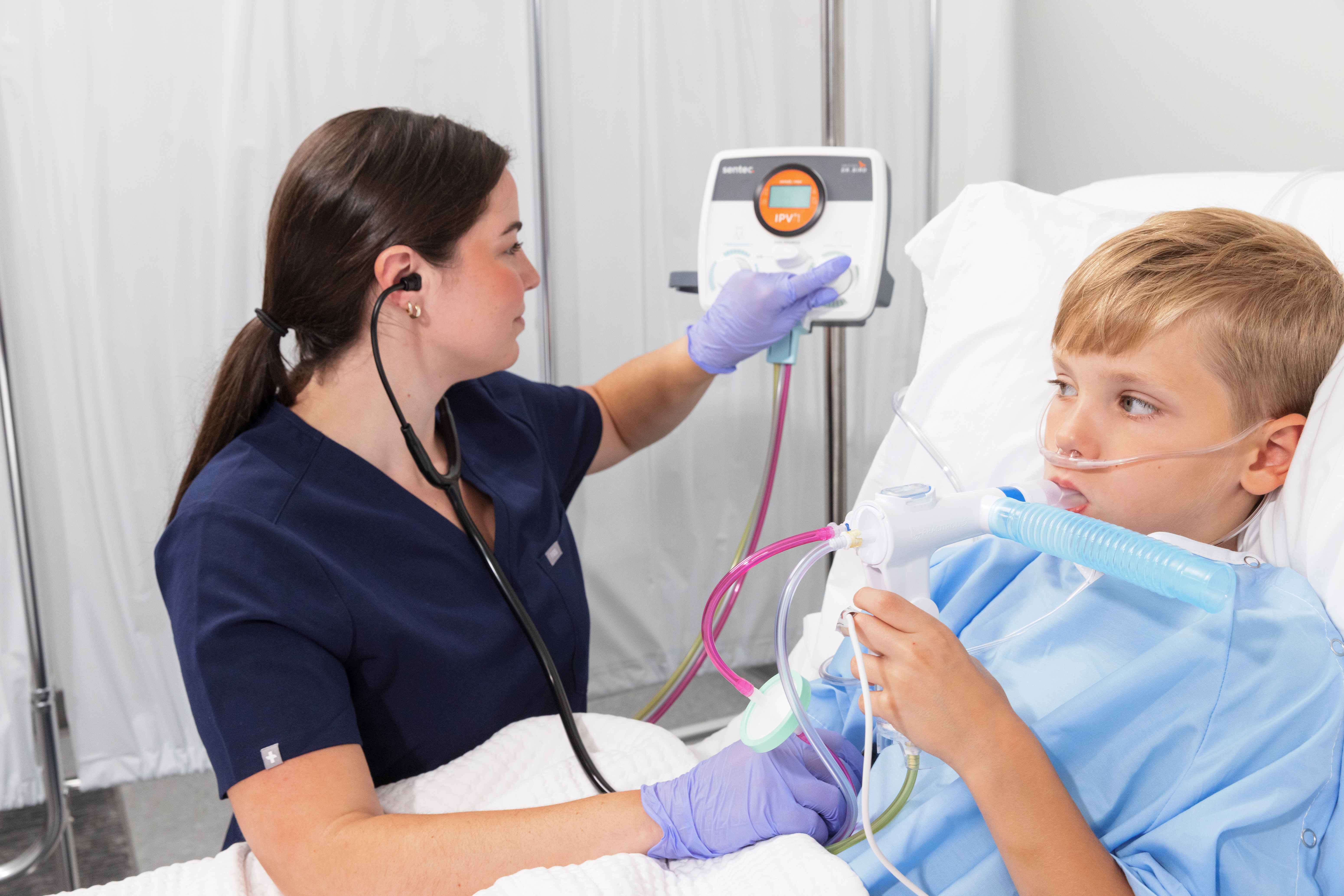

Secretion retention is a common and often underestimated challenge in critical care. It is driven not only by underlying disease, but also by routine aspects of intensive care, including endotracheal tube placement, immobility, and sedation. Though expected in the ICU, secretions are far from benign and may actively complicate a patient’s course and recovery.
For that reason, addressing secretion burden becomes more than just routine management — it’s a meaningful opportunity to influence patient outcomes. Intrapulmonary percussive ventilation (IPV) is an airway clearance approach designed to help mobilize retained secretions, with growing evidence supporting its role in improving outcomes in critically ill patients.
Why Airway Clearance Therapy Matters in the ICU
In the ICU, secretion retention is often viewed as a passive byproduct of illness or mechanical ventilation, with management frequently limited to routine measures such as suctioning as needed. However, its impact is far more clinically significant. Retained secretions can drive a vicious cycle in which infection, impaired lung function, and ongoing mucus accumulation reinforce one another, ultimately complicating a patient’s recovery.
It can often look like this: accumulated mucus creates an ideal environment for microbial growth,1 which can lead to respiratory infections. In response, the body’s immune system can increase mucus production while also triggering inflammation that can directly damage lung tissue.2 Inflammation and the resulting lung damage can further weaken cough, reducing the airways’ ability to clear mucus. The result is continued mucus buildup, reinforcing the cycle and making recovery more difficult.
Evidence shows that retained secretions can negatively influence a patient’s trajectory and are tied to key ICU outcomes such as extubation success – a top priority in the ICU, as it is linked to longer hospital stays, higher costs, and increased mortality.3,4 For example, among patients who required reintubation within 24 hours of extubation, one study identified impaired secretion clearance as the most common cause, reported in 66% of cases. Frequent suctioning (more than once every two hours before extubation) was also identified as an independent predictor of failure.5
Given the central role secretions play in this cycle — and their association with adverse outcomes — effective airway clearance can be an important component of improving recovery in critically ill patients.
Improving ICU Outcomes with IPV Therapy
Used by respiratory teams in PICUs, chronic home care, and adult ICUs, IPV therapy is an airway clearance tool that delivers high-velocity, high-frequency, sub-tidal volume pulses that break up secretions deep in the lungs and mobilize them proximally. By reaching beyond obstructed areas, it can also help relieve air trapping and support recruitment of collapsed lung regions.
Effectively mobilizing and clearing secretions from the airways, IPV therapy may help disrupt the cycle of respiratory compromise driven by mucus retention, with evidence suggesting improvements in key outcomes for ICU patients.
Let’s Explore the Research:
Mucus Clearance
IPV therapy has been shown to support airway clearance by effectively mobilizing secretions in the lungs.
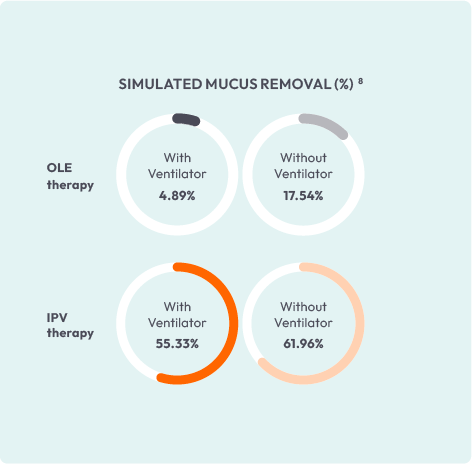
A 2021 bench study demonstrated the effectiveness of IPV therapy in mobilizing mucus, showing superior removal of simulated secretions compared to OLE therapy. These findings were consistent in both invasively ventilated and non-ventilated conditions.6
Atelectasis Reduction
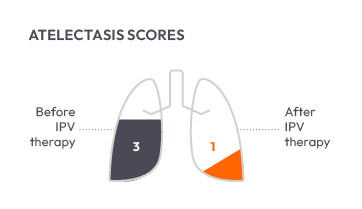
In a randomized controlled study of ventilated pediatric patients, researchers compared IPV therapy with chest physical therapy (CPT), evaluating changes in atelectasis and static compliance.
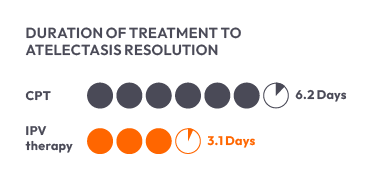
The IPV group showed a marked improvement in atelectasis scores, improving from 2.3 to 0.9, while no change was observed in the CPT group. Additionally, resolution of atelectasis occurred in significantly less time with IPV therapy (3.1 days vs 6.2 days).7
Shorter Hospital Length of Stay
Evidence also suggests IPV therapy may contribute to reductions in ICU and hospital length of stay, reflecting potential benefits in overall recovery trajectories.
In a study of non-ventilated critically ill patients, IPV therapy was associated with shorter lengths of stays in the ICU – with stays being “significantly shorter” compared to a group treated with CPT.8
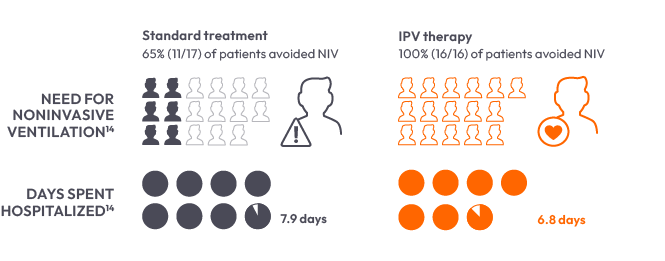
Similarly, in a study of 33 patients with exacerbations of COPD, “the hospital stay was significantly shorter in the IPV group (6.8 days) than in the control group (7.9 days).” Importantly, “exacerbation worsened in 6 out of 17 patients” in the control group, compared to none in the IPV group, suggesting a meaningful impact on clinical course.9
Finally, in a study of ICU patients on noninvasive positive pressure ventilation (NPPV), adding two sessions daily of IPV therapy was associated with reduced duration of stay in the ICU. There were also other improvements in patient course with IPV therapy, including reduced duration of ventilatory treatment and improved gas exchange upon discharge – outcomes that were better when compared to a group receiving traditional CPT.10
In Summary…
Secretion retention can drive a cycle of respiratory decline in the ICU, making effective airway clearance a critical part of care. IPV therapy is designed to directly address this challenge by effectively mobilizing secretions. With a growing body of evidence linking IPV therapy to improvements in mucus clearance, atelectasis, and length of stay, it represents a valuable tool as respiratory teams optimize outcomes for their patients.
References:
- Fahy, J.V., et al. Airway mucus function and dysfunction. N Engl J Med. 2010.
- van der Lee, L., et al. Efficacy of Respiratory Physiotherapy Interventions for Intubated and Mechanically Ventilated Adults with Pneumonia: A Systematic Review and Meta-Analysis. Physiother Can. 2021.
- Epstein, S.K., et al. Independent effects of etiology of failure and time to reintubation on outcome for patients failing extubation. Am J Respir Crit Care Med. 1998.
- Gowardman, J.R., et al. The effect of extubation failure on outcome in a multidisciplinary Australian intensive care unit. Crit Care Resusc. 2006.
- Haruna, J., et al. Frequent tracheal suctioning is associated with extubation failure in patients with successful spontaneous breathing trial: a single-center retrospective cohort study. JA Clin Rep. 2022.
- Conomon, D., et al. High frequency percussive airway clearance utilizing two devices in simulation of mucous clearance, without spontaneous breathing, both with and without mechanical ventilation. Respir Care. 2021.
- Deakins, K., Chatburn, R.L. A comparison of intrapulmonary percussive ventilation and conventional chest physiotherapy for the treatment of atelectasis in the pediatric patient. Respir Care. 2002.
- Hassan, A., et al. Effect of intrapulmonary percussive ventilation on intensive care unit length of stay, the incidence of pneumonia and gas exchange in critically ill patients: A systematic review. PLoS One. 2021.
- Vargas, F., et al. Intrapulmonary percussive ventilation in acute exacerbations of COPD patients with mild respiratory acidosis: a randomized controlled trial [ISRCTN17802078]. Crit Care. 2005.
- Antonaglia, V., et al. Intrapulmonary percussive ventilation improves the outcome of patients with acute exacerbation of chronic obstructive pulmonary disease using a helmet. Crit Care Med. 2006.