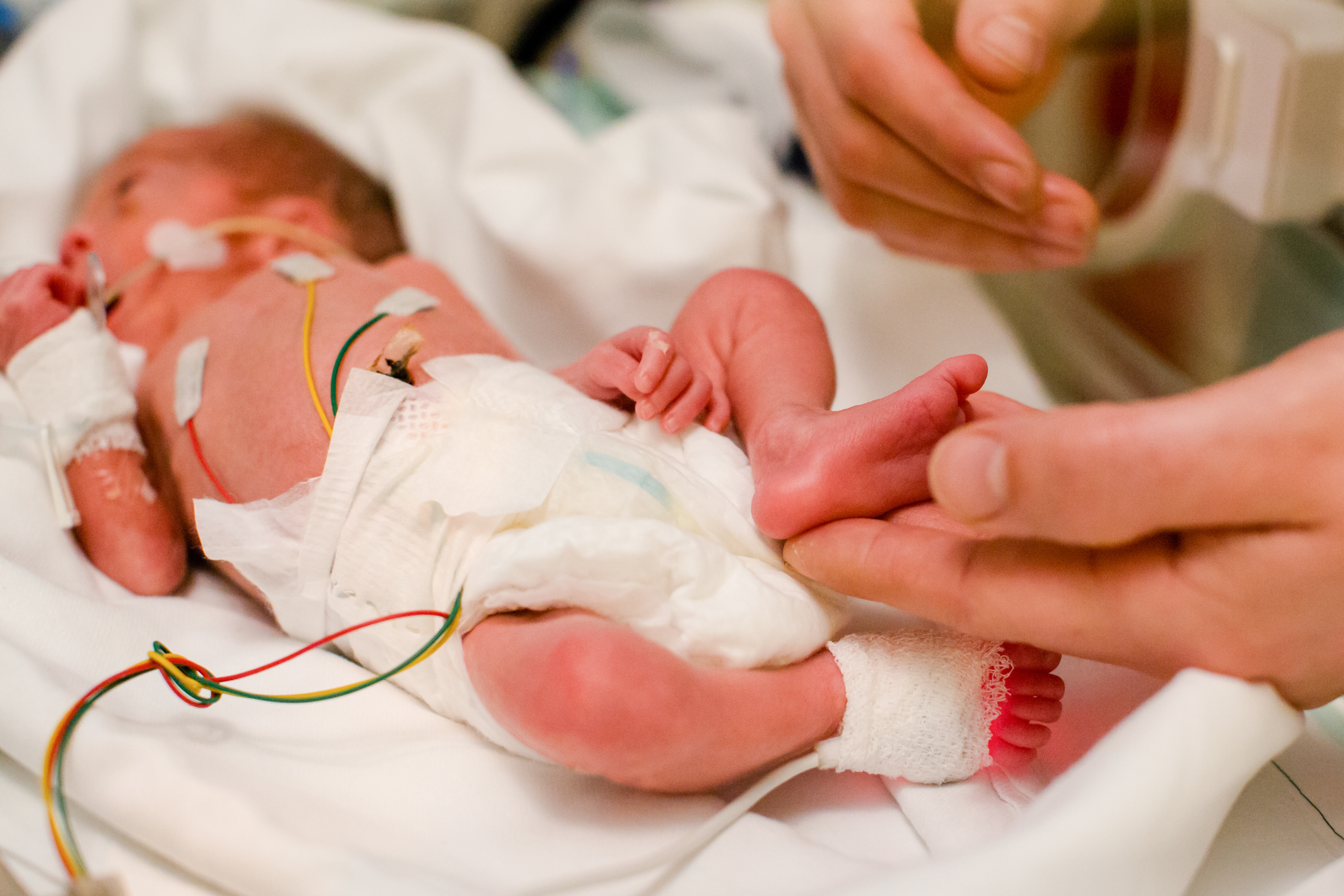


Preterm infants are highly vulnerable, with their underdeveloped physiology placing them at increased risk for complications. Among the many priorities in their care, neuroprotection is central, as the preterm brain is especially susceptible to injury that can lead to both short- and long-term consequences.
While every hour matters in the NICU, the first 72 hours of life represent a particularly vulnerable window when it comes to protecting the developing brain. During this time, maintaining stable CO2 levels is critical, and careful monitoring and management can have a significant impact on supporting optimal outcomes.
Intraventricular Hemorrhage (IVH) and the Role of CO2
Intraventricular hemorrhage (IVH) is bleeding into the brain’s fluid-filled spaces, known as the ventricles. It is a serious concern for patients in the NICU, as it can result in brain injury with lasting consequences, including cerebral palsy, language and cognitive impairments, and other adverse neurodevelopmental outcomes.¹
The risk of IVH is particularly high among very low birth weight infants. Studies estimate that those weighing less than 1500 g face a 25–42% risk of occurrence.²,³ The earliest days of life are especially critical, with the likelihood of IVH peaking within the first three days after birth.4
This heightened vulnerability is largely driven by the immaturity of the cerebral vasculature and the fragile germinal matrix, which are most susceptible to injury during this early period.4 Because of this immaturity, preterm infants often lack autoregulation, or the ability to maintain stable cerebral blood flow. As a result, the vessels in the germinal matrix do not respond well to changes in blood pressure or CO2. Instead, they behave passively, making them more prone to fluctuations in blood flow and, ultimately, injury.5
CO2 levels play a particularly important role in the development of IVH during these first days of life, largely due to their impact on cerebral physiology. CO2 directly impacts cerebral blood flow (CBF) and is widely considered its “most potent acute regulator.”6 Even small changes in CO2 can lead to significant shifts in CBF.
Multiple studies link both elevated and low levels CO2, as well as significant fluctuations, to the development of IVH in preterm infants.7-9 Together, this research supports just how important it is to keep CO2 within a stable range to help protect the developing brain. As one group of researchers notes, “it may be prudent to avoid significant hypocarbia and hypercarbia and CO2 fluctuations especially during the first 3 days of life, when the risk for IVH is highest.”10
CHAPTERS
Where Continuous CO2 Monitoring Fits into the Picture
Because excessive highs, lows, and fluctuations of CO2 levels can place preterm infants at risk — especially during the first few days of life — close monitoring is critical for protecting the developing brain.
Continuous CO2 monitoring gives NICU teams the ability to follow trends in real time rather than relying on intermittent blood gas checks. This allows clinicians to identify changes as they happen, reducing the chance that meaningful shifts go unnoticed. With continuous feedback, teams can make timely and precise adjustments to ventilation, helping maintain CO2 within a safe range and supporting protection of the developing brain from complications such as IVH.
Transcutaneous CO2 Monitoring in the NICU
Transcutaneous CO2 monitoring (tcPCO2) provides a continuous, noninvasive way to monitor CO2 levels in neonatal patients. While end‑tidal CO2 monitoring (capnography) also provides continuous measurement, several inherent limitations can make it less reliable in the NICU. Factors such as uncuffed endotracheal tubes, added dead space, ventilation–perfusion (V/Q) mismatch, and the very low tidal volumes typical in neonates can lead to inaccurate readings. In addition, capnography is generally not compatible with noninvasive ventilation or high-frequency ventilation, both of which are commonly used in neonatal care.
Transcutaneous monitoring addresses these challenges and is compatible with any mode of ventilation — including mechanical ventilation, high-frequency ventilation (HFV), high-flow nasal cannula (HFNC), and bubble CPAP. This versatility allows it to be used across a wide range of clinical scenarios, providing accurate, real-time CO2 data without being restricted by the type of respiratory support.
Additionally, transcutaneous monitoring avoids adding dead space or weight to the endotracheal tube, unlike end-tidal monitoring, since it relies on a sensor applied to the skin rather than equipment attached to the airway. Transcutaneous monitoring maintains accuracy regardless of ventilation-perfusion (V/Q) mismatch and variations in respiratory rate or tidal volume, supporting reliable monitoring of gas exchange across a variety of clinical conditions.
During the first days of life, when maintaining CO2 stability is especially important, this reliable, real-time monitoring can help guide clinicians as they lead neuroprotective care and support the best outcomes for their patients.
References:
- Hong & Rha. J Korean Neurosurg Soc. 2023.
- Vermont Oxford Network Database of VLBW Infants Born in 2012. 2013.
- Ahn et al. J Korean Med Sci. 2015.
- Ballabh. Clin Perinatol. 2014.
- Brew et al. Am J Physiol Regul Integr Comp Physiol. 2014.
- Noori et al. Acta Paediatr. 2014.
- Erickson et al. J Paediatr Child Health. 2002.
- Wallin et al. Early Hum Dev. 1990.
- Fabres et al. Pediatrics. 2007.
- Hochwald et al. Pediatrics. 2019.