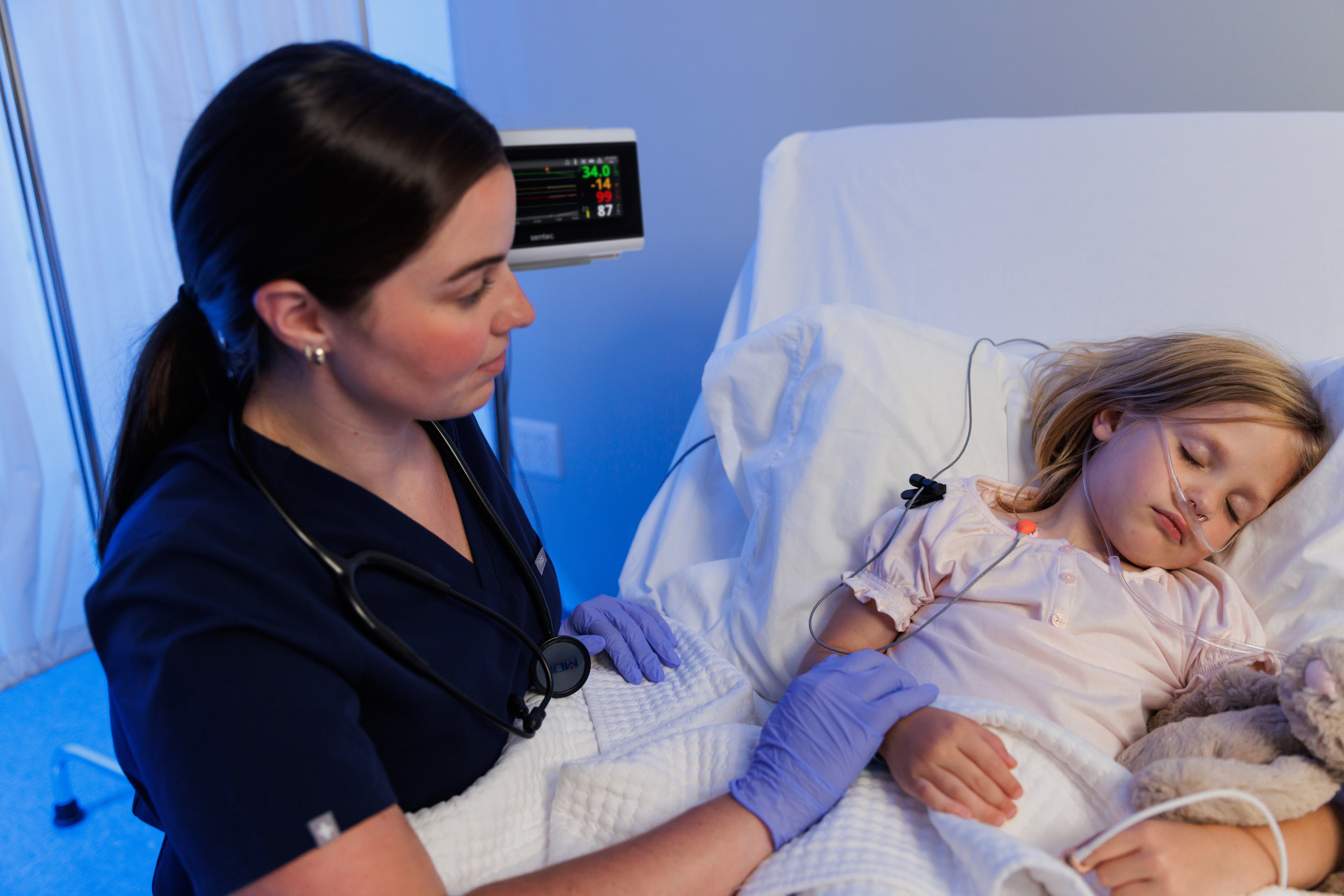
As healthcare teams continue to seek ways to improve workflow efficiency, reduce blood draws, and support proactive ventilation management, monitoring technology must evolve alongside clinical practice.
The Sentec tCOM+ was developed to do exactly that.
Built on the same clinically proven transcutaneous monitoring technology trusted by NICUs, sleep labs, PICUs, ICUs, and respiratory care departments worldwide, the tCOM+ introduces a modern user experience designed to simplify workflows while maintaining the accuracy and reliability clinicians expect from Sentec transcutaneous monitoring.
In this webinar, we introduced the key features of the tCOM+ and explored how these enhancements can help clinicians spend less time navigating technology and more time focused on patient care.
Built on the Foundation of Proven Transcutaneous Monitoring
At its core, the tCOM+ uses the same Sentec transcutaneous CO2 monitoring technology that clinicians have relied on for years.
Sentec transcutaneous sensors continuously measure carbon dioxide by gently heating the skin and promoting diffusion of CO2 through the sensor membrane. The monitor then calculates transcutaneous PCO2 values, providing clinicians with continuous, noninvasive insight into a patient’s ventilation status.
This technology continues to support:
- Reduced blood draws
- Continuous transcutaneous CO2 monitoring
- Earlier detection of ventilation changes
- More proactive respiratory management
- Enhanced patient comfort compared to repeated blood sampling
While the underlying monitoring technology remains familiar, the tCOM+ introduces significant workflow improvements throughout the user experience.
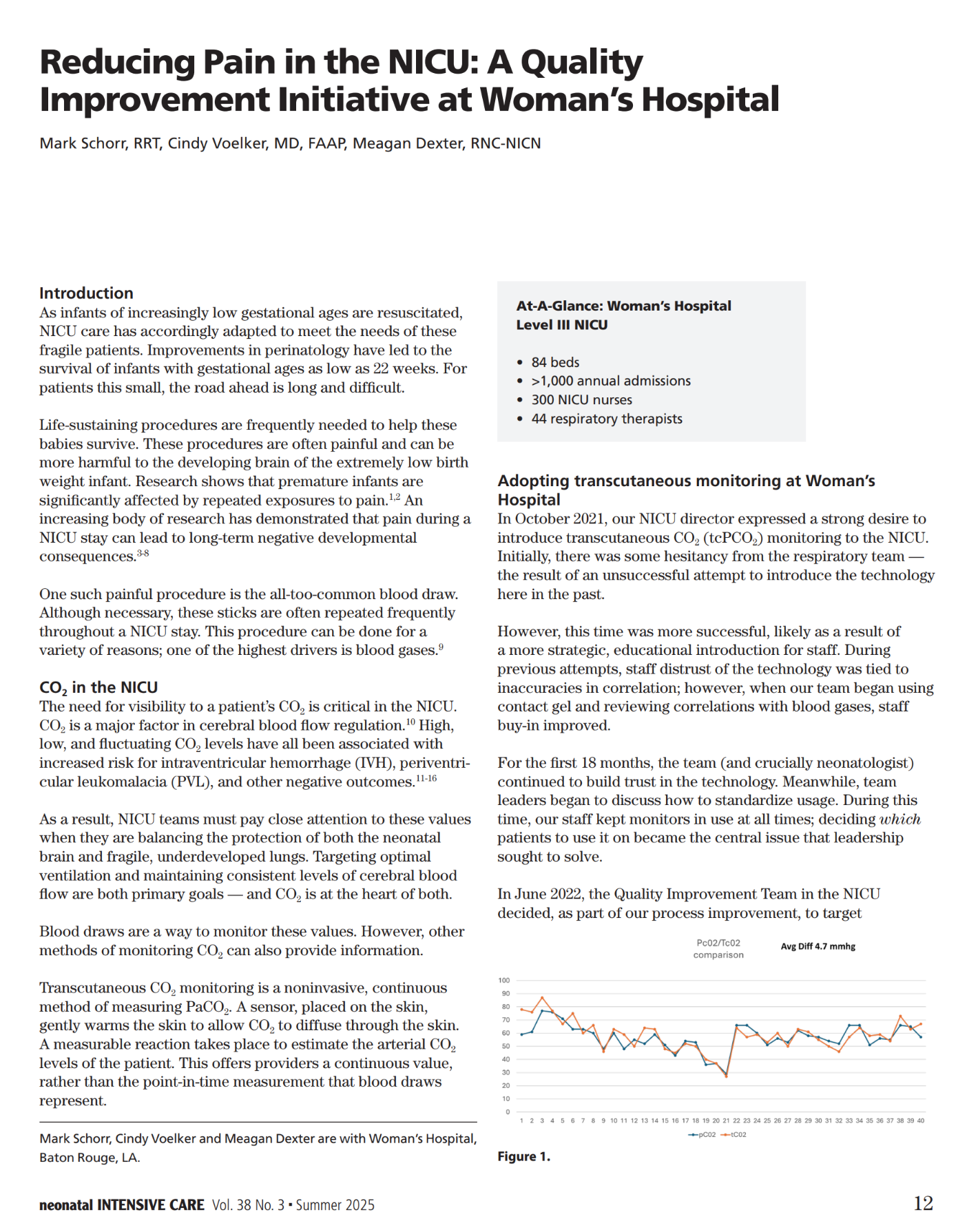
A Modern Touchscreen Designed for Clinical Workflows
One of the most noticeable differences between the tCOM+ and previous Sentec monitoring platforms is the high-resolution touchscreen interface.
The tCOM+ was designed to operate much like a modern tablet, allowing users to access settings, alarms, trends, and monitoring features directly from the main screen.
Rather than navigating through multiple menu layers, clinicians can quickly:
- Adjust alarm limits
- Modify trend ranges
- Change profiles
- Review historical data
- Access tutorials
- Monitor sensor status
These improvements help reduce training requirements and simplify daily operation for both experienced and new transcutaneous monitoring users.
Smarter Calibration and Faster Troubleshooting
Calibration is an essential part of any transcutaneous monitoring system, and the tCOM+ introduces several improvements designed to streamline that process.
A new calibration timer provides real-time visibility into calibration progress, allowing clinicians to see exactly how much time remains before the monitor is ready for patient use.
The system also performs leak testing earlier in the calibration process. If a problem is identified, clinicians can address it immediately rather than waiting until the end of a calibration cycle.
Additionally, the tCOM+ performs an automated Sensor Health Check every three days. This process helps identify potential membrane or sensor issues proactively, reducing unexpected interruptions and supporting more reliable monitoring performance.

Enhanced Docking Station Design
Sentec users are familiar with the importance of maintaining a properly functioning docking station.
To address one of the most common causes of service calls and troubleshooting events, several docking station improvements were incorporated into the tCOM+ design.
These updates include:
- A stronger docking station spring
- Improved magnetic door retention
- A redesigned O-ring sealing system
Unlike previous gasket designs that could be installed incorrectly, the new O-ring design eliminates installation orientation concerns while helping reduce docking station leak events.
The result is a more reliable calibration experience and less time spent troubleshooting docking station issues.
More Flexible Data Visualization
Different clinical environments require different ways of viewing patient information.
The tCOM+ allows users to customize how transcutaneous monitoring data is displayed through multiple viewing modes.
Users can choose between:
- Traditional trend displays
- Large numerical displays
- Multi-parameter views
- Tabular data views
The tabular view is particularly useful for clinicians who routinely document transcutaneous CO2 values, allowing them to quickly review historical measurements at predefined intervals.
The monitor also supports pinch-to-zoom functionality and historical trend review, making it easier to evaluate patient changes over time.
Event Logging and Clinical Documentation
The ability to correlate patient events with transcutaneous monitoring data can provide valuable clinical insight.
The tCOM+ allows clinicians to add event markers directly onto the trend graph.
Examples include:
- Ventilator changes
- Clinical interventions
- Therapy adjustments
- Patient events
By documenting events directly within the monitoring record, clinicians can better evaluate how interventions impact transcutaneous CO2 trends and patient response.
Built-In Training and Education Tools
One of the most frequently requested features from clinical teams was easier access to education and troubleshooting resources.
The tCOM+ addresses this need with integrated tutorials available directly on the monitor.
Users can access step-by-step guidance for:
- Membrane changes
- Sensitivity testing
- Sensor troubleshooting
- Sensor application
- Clean-and-soak procedures
These resources help support competency development, onboarding, and ongoing staff education without requiring separate manuals or training materials.
Maintaining the Features Clinicians Already Trust
While the tCOM+ introduces significant workflow enhancements, it retains many of the features that have made Sentec transcutaneous monitoring successful across multiple care settings.
Clinicians continue to benefit from:
- Continuous transcutaneous CO2 monitoring
- Low-temperature monitoring capabilities
- Long monitoring durations
- Smart CalMEM disconnect functionality
- Compatibility with existing attachment solutions
- Skin-friendly neonatal monitoring options
The tCOM+ also supports connectivity with sleep study software, bedside monitoring systems, electronic health records, and other hospital technologies.
A Smarter Monitoring Experience
By combining proven transcutaneous CO2 monitoring performance with a modern user interface, enhanced troubleshooting tools, improved data visualization, and built-in educational resources, the tCOM+ helps simplify workflows while maintaining the clinical confidence healthcare teams expect from Sentec.
For organizations looking to expand or modernize their transcutaneous monitoring capabilities, the tCOM+ offers a platform designed around both patient care and clinician experience.