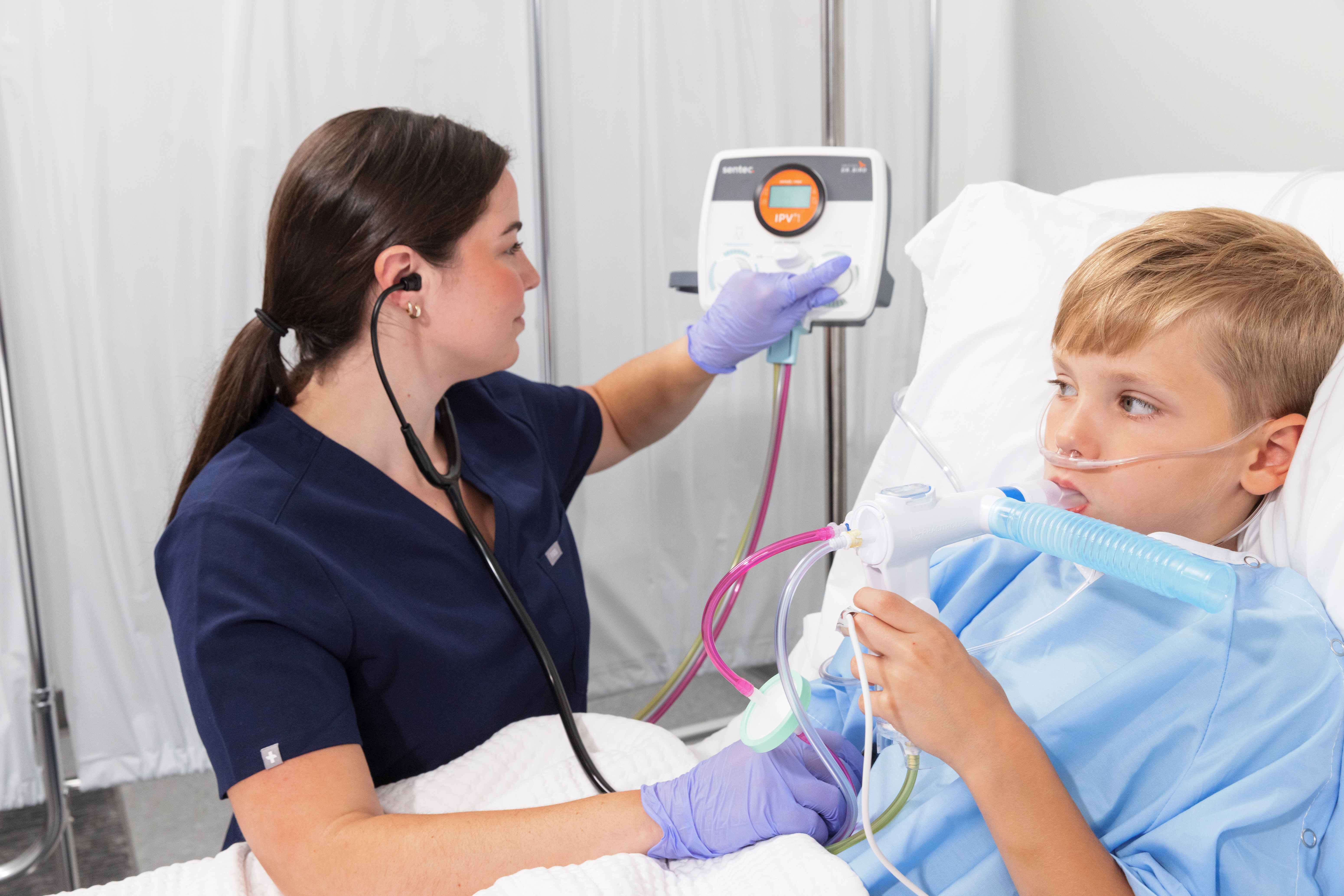


I’m genuinely excited to present this webinar because I believe we’re at an important turning point in respiratory care at home.
For respiratory therapists, discharge planners, physicians, and home care providers, we’re seeing a growing number of patients struggling with chronic respiratory insufficiency, secretion retention, recurrent infections, and repeated hospitalizations. Patients and caregivers are looking for therapies that can improve quality of life and help keep people out of the hospital.
In this webinar, Delivering IPV Therapy in the Home, we’ll explore why intrapulmonary bronchial hygiene therapy is increasingly becoming an important option for patients with chronic respiratory conditions and the importance of understanding the differences between therapies like IPV, OLE, HFCWO, MI-E, and CPT.
The Problem: Secretion Retention Is Often the Beginning of the Downward Spiral
Secretion retention, atelectasis, and air trapping are separate physiological problems, but in many patients they can become interconnected. Retained secretions can lead to infection and atelectasis and may worsen air trapping in patients with obstructive lung disease, ultimately compromising ventilation, causing an increase work of breathing.
In the home setting, respiratory therapists see this every day in patients with diagnoses such as:
- Amyotrophic lateral sclerosis (ALS)
- Spinal Muscular Atrophy (SMA)
- Chronic Obstructive Pulmonary Disease (COPD)
- Bronchiectasis
- Cystic fibrosis
- Duchenne muscular dystrophy
- Spinal cord injury
- Other neuromuscular diseases
These patients often struggle with ineffective cough, impaired mucociliary clearance, chronic mucus burden, and reduced pulmonary function. In this session we'll explore BHT and how they may allow RTs to intervene earlier and more effectively.
Why Home Respiratory Care Matters More Than Ever
The need for effective respiratory therapy in the home is growing rapidly.
Hospitalizations for respiratory failure continue to rise, and COPD readmissions alone cost the U.S. healthcare system more than $15 billion annually. At the same time, an aging population means a more vulnerable population with more comorbidities, including those with chronic pulmonary impairments.
During the webinar, we'll look at the data behind these trends and discuss how improving airway clearance and lung recruitment at home may help reduce the burden on hospitals while improving long-term patient outcomes.
Key Differences Between Bronchial Hygiene Therapies
Another major focus of the webinar is understanding the differences between bronchial hygiene therapies (BHTs).
Too often, therapies are grouped together as if they function identically. But chest physiotherapy, PEP/OPEP devices, HFCWO vests, mechanical insufflation-exsufflation, OLE therapy, and IPV therapy all work through different mechanisms and produce different physiological effects.
We'll break down:
- How each therapy works
- Which patient populations each therapy is best suited for
- What the clinical evidence says
Exploring the Differences Between IPV Therapy and OLE Therapy
It's not uncommon for providers and even researchers to categorize OLE Therapy as IPV. Though similarities exist, it is important to understand that these devices operate differently. These differences may have an impact on how the patient may tolerate the therapy and thus the efficacy treating symptoms.
We'll discuss:
- Flow-driven versus pressure-driven systems
- How airflow characteristics impact distal airway recruitment
- The role of percussion and entrainment
- How expiratory flow differs between systems
- The evidence supporting each therapy
IPV Therapy in the Home
What makes IPV Therapy compelling is its ability to address multiple respiratory challenges simultaneously.
IPV Therapy combines:
- High-velocity flow
- Entrainment
- Nebulization
- Unrestricted expiratory flow
- Percussion
IPV Therapy is designed to mobilize secretions, recruit under-ventilated lung regions, reduce air trapping, and improve overall pulmonary function.
We'll review clinical studies, bench trials, and real-world patient cases demonstrating how IPV Therapy has been used successfully in both acute care and home care settings.
We'll also discuss when IPV Therapy makes the most sense in the home:
- Patients with chronic secretion retention
- Recurrent atelectasis
- COPD with air trapping
- Weak or ineffective cough
- Failure of conventional airway clearance therapies
- Recurrent hospitalizations despite adherence to current treatment plans
- Patients diagnosed or at risk of developing Bronchiectasis
A Major Development: Reimbursement for IPV Therapy at Home
One of the most exciting developments is that IPV Therapy is now increasingly reimbursable in the home setting.
For many years, reimbursement challenges limited access to therapy. That landscape is changing, with IPV Therapy now being approved for reimbursement.
In the webinar, we'll review:
- Billing codes
- Medicare pathways
- Medicaid considerations
- Fee schedules
For home care providers and clinicians, this is an important shift because it opens the door for more patients to access advanced airway clearance therapy outside the hospital.
The Bigger Goal: Improving Quality of Life
Ultimately, this webinar is about improving patient outcomes.
Respiratory therapists and home care clinicians work incredibly hard to keep patients stable, functioning, and out of the hospital. The more effectively we understand airway clearance, secretion management, lung recruitment, and therapy selection, the better equipped we are to support those goals.
IPV Therapy is not a universal solution for every patient. But for the right patient population, the evidence suggests it can play a significant role in improving secretion mobilization, reducing atelectasis, decreasing air trapping, and potentially limiting hospitalizations.
I’m looking forward to diving deeper into all of this during the webinar and having an opportunity to discuss both the science and the practical realities of implementing IPV Therapy in the home setting.